Showing posts with label Barack Obama. Show all posts

Monday, February 9, 2009

American Gigantism: Big Bad News

Same as :en::Image:DJIA historical graph.svg, ...Image via Wikipedia

It occurred to me this morning, while I was pumping iron at the gym in the hopes that giant muscles would compensate for my burgeoning gut, that my usual refuge from bad news is gone.

See, I'm not someone who can just ignore the news--I make my living from it. But what I usually do is, if news is bad on the political front, I just focus on sports. (And one of the benefits of living in New York is that there's always a professional or college sports team playing well enough to captivate our collective attention.) If sports news is bad (i.e., the Yankees lost a game), I can turn to politics (and again, living in New York, there's no shortage of politics, and I know I'll be able to find some liberal cause or other that won some kind of victory worth celebrating.)

It's not a big thing, this temporary respite from reality. It's just like my brain needs a spot of shade from the oppressive glare and heat of bad news.

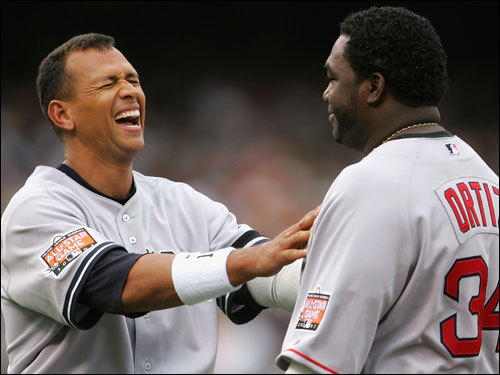
I'm a Yankee fan, and now I have to deal with the fall-out from the revelation that Alex Rodriguez took steroids--and I'll have to deal with hearing about this for the next nine years of his contract. This is especially awful because I have to share the city of New York with fans of another team who take as much, if not more, delight in the failures of the Yankees than the success of their own favorite team.

With Obama in the White House now, you'd think I could find some good news there. But the truth is that our problems are so big that nothing he does seems likely to fix them.

By far the biggest problem we face is the financial crisis (although global warming and the Middle East aren't far behind). And Obama is working on fixing our system, while what we really need is to change the system itself.

There's never a better time for radical change than during times of crisis, but it looks like the change we need is too scary to even contemplate.

And what we really need is to readjust our lenses and our appetites for the possible. (Economist Nouriel Roubini also believes our system has failed.)

But from what I see and read in the news, folks on Wall Street and in Washington still think that at some point, we're going to get back on track and that life will go on as it did before, with double-digit growth, low unemployment, and largely unregulated markets.

All we have to do is weather the storm.

But I don't think that's going to happen.

They're delusional, and unfortunately, their hallucinations can affect our reality. We need to absorb the lesson rather than pretend it's just a pop quiz in the classroom of our lives, but it looks like we're all willing to share in the common hallucination.

We need to change, but I don't see any big changes in the offing, and that too says something about our national character.

There was a time, not too long ago, when Americans were capable of reacting quickly and turning on a dime, just to try something different. Remember the Contract With America? I was no fan--I'm still not--but, especially living abroad in the land of government oversight, I was impressed with Americans' willingness to try something new, kick out the bums (even if they were Democrats) and experiment.

It seemed like a watershed event that portended a long-term shift in American politics. That was 1994, and only ten years later, Democrats were back in control of the House.

What happened in the meantime? Corporate profits and stock market returns from 1994 to 2004 grew like never before, fueled in large part by government investment in technology and basic research, and productivity gains from technology in the private sector.

For illustrative purposes, note that the Dow Jones Industrial Average was at 1132.40 in June 1984, rose to 3646.55 at the same period in 1994, and then skyrocketed to 10,416.41 in 2004.

The trough from 2001-2003 was a result of the simultaneous bursting of the tech bubble, accounting scandals that shook confidence in Wall Street, and of course 9/11.

But the Bush tax cuts and the repeal of Glass-Steagall helped fuel a new boom, this time in real estate, that allowed huge numbers of homeowners to refinance their mortgages, close the income disparity gap between themselves and the wealthy, and to fuel further double-digit corporate sales and profits growth.

And we learned to like it big in those years. In every way. We learned to love big SUVs that helped accelerate global warming (and if you still don't think this is real, please check this article); we learned to love big meals from McDonalds, big profits from big companies, big mergers and bigger banks, and big increases in house valuations.

And huge numbers of home runs from our big baseball players.

In fact, players in every sport were getting super-sized, and we ate it up. We didn't ask them to use steroids, but we sure liked the results. We loved the spectacle of 250-pound linebackers running faster than Carl Lewis and 400-foot "big-flies" (as Jon Miller loves to call them on the Sunday Night Game of the Week).

We loved huge streaks (Cal Ripken, the number of quarters of consecutive GDP growth) and huge steaks.

We got hooked on big.

I've put this in the past tense, but its still happening, of course. This is why Barack Obama can't allow Wall Street to fail massively. Our retirements are sitting in pension funds that own those Big stocks (and many of those funds have bylaws that force the fund managers to hold certain percentages of Blue Chip stocks), so the pain wouldn't just be felt on Wall Street and among the hedge fund types that few people would mind seeing flayed and flopping in the wind.

If the U.S. financial system collapses, we're all going to feel huge pain.

But despite the banking rescue and the stimulus package, I think we have changed. For one thing, I think we'll be more wary of the next Big Thing. We're going to look around and see that maybe they're not so crazy in France after all, clinging to their baguettes, their Brie, and their ancestral family homes tucked away in the Rhone Valley.

This will take some getting used-to. We're going to save more and spend less, and that's going to mean no more double-digit sales growth at the Gap; no more double-digit profits growth for the advertising sector; no more big windfalls for the day traders.

Just because superficialities like the speed of communications and the depth of knowledge have changed doesn't mean that the normal rhythms of life have changed. Seasons still require 3 months to play themselves out, we mature and we age, and we can't go back in time.

We'll find that smaller growth isn't so bad. Spending 16 hours a day in front of the computer screen won't be worth as much, so we'll probably have more time to spend with our friends and family, or watching a baseball game slowly unfold before us, probably with a lot fewer home runs than we've gotten used to.

Reblog this post [with Zemanta]

Wednesday, January 28, 2009

Stimulating Days

LAS VEGAS - OCTOBER 30:  (L-R) Actor Tony Danz...Image by Getty Images via Daylife

Cynicism is easy. Just pop in the toaster of received truths (nothing ever changes, they're all crooks, waste of taxpayer money) and wait a second.

Cynicism is easy, and it's also usually wrong. Being cynical is like doubting that the sky is blue just because it happens to be raining. (And then maintaining that it only 'looks' blue when the skies clear.)

Good things happen if you work for them and keep your eyes open.

There's a lot to like about the new stimulus bill, and probably a lot to dislike as well. What's new here is that we're getting a chance to look at the sausage-making process. We're being asked to behave like grown-ups.

Items I like include money for mass transit and assistance on energy costs to low-income Americans.

In addition to his usual admonition for people to act responsible, President Obama reiterated that his Administration will make the spending transparent to the American people.
“Corporate America will have to accept its own responsibility to workers and the American public,” Mr. Obama said, after alluding to an “atmosphere of irresponsibility” on Wall Street and in Washington that he said had helped push the economy toward ruin. He said, too, that he understands the skepticism that some people feel about the prospect of spending astronomical sums of the taxpayers’ money efficiently. Therefore, he said, his administration will put in place “unprecedented measures,” including Internet postings, to allow the American people to see where the streams of dollars are flowing.

That means not throwing up our hands in disgust, and not stamping our feet because our political opponents got something they want that we didn't. It means looking at the results and deciding whether, on balance, there's more of what we wanted and whether it's better than nothing.

So far, so good, as far as I can see.

Reblog this post [with Zemanta]

Tuesday, January 27, 2009

Give Obama Credit

US Senator Barack Obama campaigning in New Ham...Image via WikipediaA lot of people on the left are fretting that Obama is allowing the GOP to undermine his stimulus package by diluting it with tax cuts and reduced spending--before voting against it--thereby giving themselves an electoral boost in 2010 by showing they had the wisdom to vote against a loser of a plan.

In other words, Obama is letting himself get outsmarted by the Republicans because he is naive enough to think they will end him a helping hand in exchange for his magnanimous approach to governance.

Just so I'm sure we're talking about the same guy: this is the same Barack Hussein Obama who beat powerful connected, household name Senator Hillary Clinton, right? And rich-as-hell Jonathan (pre-adultery revelation) Edwards.

And who then thumped heroic war veteran and maverick John McCain. Right?

I used to make the mistake of thinking that because this guy is a panty-waist because he aims to change the culture in Washington, get beyond partisan politics, and make government more responsive to the American people.

Anyone with ideas like that has to have his head in the clouds, right? An idealist in a world of real politik. Well, shame on me and shame on us. No wonder we couldn't elect George McGovern. We didn't have the conviction of our own ideals.

Well, I think we have to give Obama credit for being a good fighter. He may be a visionary, but he's also a pragmatist. And he's surrounded himself with folks like Rahm Emanuel and Joe Biden, who have a little bit of experience in Washington in-fighting.

With respect to the stimulus package, I don't think Obama is being taken for a ride by the GOP. I think it's the other way around. He will get his stimulus package pretty much the way he wants it--because Pelosi will play bad cop to his good cop--and the Republicans will look petty for voting against it despite the concessions the press will note that they were given.

And the truth will probably be that they didn't get very many concessions Obama wasn't willing to write into the stimulus bill anyway.

This will weaken the GOP as Obama's term progresses and he gets to tougher nuts like health care and foreign policy.

Reblog this post [with Zemanta]

Wednesday, January 21, 2009

A Picture is Worth...

Well, this just says it all:


Thursday, January 15, 2009

Obama Meets Reactionaries Without Preconditions

Image via WikipediaPresident-elect Barack Obama accepted George Will's invitation to break bread, and supped with Will and fellow reactionary columnists Bill Kristol, David Brooks and Charles Krauthammer.

Obama apparently came to dinner without having first extracted promises that the reactionaries would share Obama's convictions, recant past positions, retract previous defamatory and patently untrue remarks, or even agree to disagree.

However, that Obama should agree to sit down with these enemies of civil liberties, coddlers of torturers and defenders of despoilers of American treasure should come as no surprise, given his campaign promises.

Reached for comment, New York Senator Charles Schumer said, "I for one am appalled. We expected 'that one' to meet with Kim Jong Il or Pol Pot or someone like that. But these guys? It's beyond incredible."

However, true to his word, Obama is reaching out to friends and foe alike, no matter how irrational they may seem.

Reblog this post [with Zemanta]

Tuesday, January 13, 2009

Obama Should Follow Spirit, Not Letter

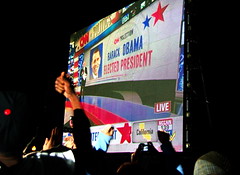
Barack Obama Elected PresidentImage by jvoves via Flickr

New York-based VC Fred Wilson makes an excellet point about the details of Obama's economic fix-it plan versus the stated purpose of Obama's candidacy.

He argues that Obama's leadership is more important than the fine print of the stimulus program, especially given that the economic models that everyone is using are likely to be anachronistic.
I had dinner last night with some friends, all of whom were big supporters of Obama and his vision of change. All of us were at least a little (and in some cases a lot) concerned that in the transition from candidate to President, Obama was getting sucked into conventional thinking. Spending a trillion dollars may work, but helping change the DNA of america and the world would help a lot more. And he doesn't need economists to tell him how to do that.
Reblog this post [with Zemanta]

Friday, January 2, 2009

Pre-Inauguration Hysteria

Bob Gates.

Lawrence Summers.

Rick Warren.

Obama's picks for various positions within his administration have created much to-do among the politically active, especially online, much of it of the hand-wringing variety. The most sympathetic summary of these Jeremiads that I can dredge up is that, given the size of Obama's victory, it's all well and good to meet the other guys half-way--but where is the proof that the other guys have any intention of meeting us half-way?

In principle, I agree that these picks (and a few others--these are just three that stand out) are disappointing in some way. Gates looks like an admission that only Republicans can handle national defense; Summers hasn't given any indication that he understands how the policies he heped craft are part of the problem; Rick Warren is a bigot.

But to cavil about these things--and yes, I'm intentionally demeaning the complainers here--is to be not only short-sighted, but to miss the whole point of Obama's campaign and subsequent election.

He's not going to do stuff we all agree with. Philosophically, he's not nearly as liberal as most progressives wish him to be, he's a bit moralistic, and above all, a shrewd and pragmatic politician.

There are 18 days left until Obama's Inauguration, followed by at least four years of sane governance by competent people. Regardless of what you think or fear about his appointments, you can take comfort that at the very least, a culture of competence will be returned to government, as well as a belief in the benefits of government activity.

Tuesday, November 11, 2008

Obama's To-Do List Growing

Barack Obama's visit to the White House yesterday seemed more like the opening salvo in a negotiation than a simple courtesy visit. President Bush may have been the one who extended the invitation, but president-elect Obama is the one with a relevant agenda.

Sure, Bush plans to issue executive directives and maybe make a few recess appointments to the federal bench during his remaining nine weeks in office. But Obama will make those irrelevant on January 21 by reversing all of them.

And none of them will address the economic crisis, wars in Iraq and Afghanistan, global warming, or our energy policy. Aside from reveling in being a "war-time president," the man once known as Shrub has shown little interest in anything of substance over the past 8 years. Why should he start now?

Meanwhile, Obama is hard at work. Careful to issue the obligatory "there's only one president at a time" homily (and while he truly has no power but the 360 electoral votes and the overwhelming popular mandate he amassed), Obama has begun to carefully push certain issues on his agenda.

First on the list is to help the auto makers before they collapse into a giant heap of scrap. The New York Times reports that during their meeting yesterday, he asked Bush to support emergency aid to the auto industry.

The Times says Bush is ideologically opposed to government intervention (with a notable exception for financial services), but that's giving Shrub too much credit. Bush is a lazy president--both intellectually and in action--and simply can't be bothered.

There may not be anything Obama can do overtly to get the automobile industry the help they need before January 20, but he's clearly sending them a signal that, to quote the 2004-vintage John Kerry, "help is on the way."

The Obama camp also revealed that the incoming president will slash government waste--by hiring more government workers.

It may seem counter-intuitive, but in fact the federal government has wasted billions of dollars because there is little or no oversight on contractors. In defense spending alone, cost overruns jumped from $42 billion in 2000 to $295 billion in 2007, according to the GAO.

On yet another front, Obama advisors are hinting that it will be more tolerant of larger mergers than would be expected from a Democratic administration. No less than Democratic lawyer David Boies, who tried Microsoft on behalf of the Clinton Administration, told the Times, "Antitrust theory is theoretical. Losing jobs and plants is real.”

This policy will be unpopular with much of the new president's constituency, but Obama clearly sees it as a necessary short-term solution to the economic crisis.

As will become apparent not only to his detractors, but to his partisans as well, President Obama will govern pragmatically, not ideologically. This might disappoint supporters like me at times, but I'll try to keep in mind that this was why I voted for him in the primaries as well as the general election: the time of rigid idealogy is past, the era of pragmatic progressivism is upon us.

Monday, November 10, 2008

Obama Web Strength Poses Ethical Dilemma

It's already clear that a President Obama plans to use the Web to further his goals, as well he should. But he should take care not to mix politics with governance--an ethical lapse which could undermine his considerable moral authority.

Obama has a network of over 10 million supports to tap into, and that could easily be turned into avalanches of emails to recalcitrant members of Congress unwilling to do the president's bidding.

The campaign-turned-administration is also likely to use search and display ads to influence public opinion on critical new initiatives. The Washington Post notes:

The White House could "geo-target" ads so they appear online in congressional districts where members remain undecided. Obama could use Internet ads to solicit signatures for petitions, or he could place display and video ads contextually -- so they would appear on the screen next to news coverage of his proposals.
The one thing the White House will have to take care of is the appearance of using government funds for something like an Obama re-election campaign. The transition team will have to clarify who owns the list, how it can be used, and under what conditions, in order to avoid charges that it is mixing governance with politics.

It's fine (and smart) for the administration to use this list to generate support for the president's policies, but not okay for the White House to use it to help elect allies in Congress in 2010 or to further the president's own re-election bid.

It might seem like hair-splitting, but the Obama campaign might want to consider selling its list to its own transition team, and then letting the two lists grow separately from January 20, 2009 onwards.

Friday, November 7, 2008

Changeology 101

Barack Obama got his Presidency-in-Anticipation (what it's called when everyone clearly wants him to take the oath of office immediately) off to a great start with his president-elect Web site. It includes a lot of features that he included in his campaign site, including the ability to share your vision and share your story.

But best of all, and what bodes well for the future, there's a page for submitting ideas.

Obama seems to really believe that this is our government, and he's encouraging us to help formulate policy.

That's what I call change.